
Last Updated: 16 Jan 2022
Cyber security is the shielding of web-associated systems — including hardware, software, and data — from cyber threats. It is widely used by individuals and organizations to defend against unauthorized access to servers and other electronic systems.
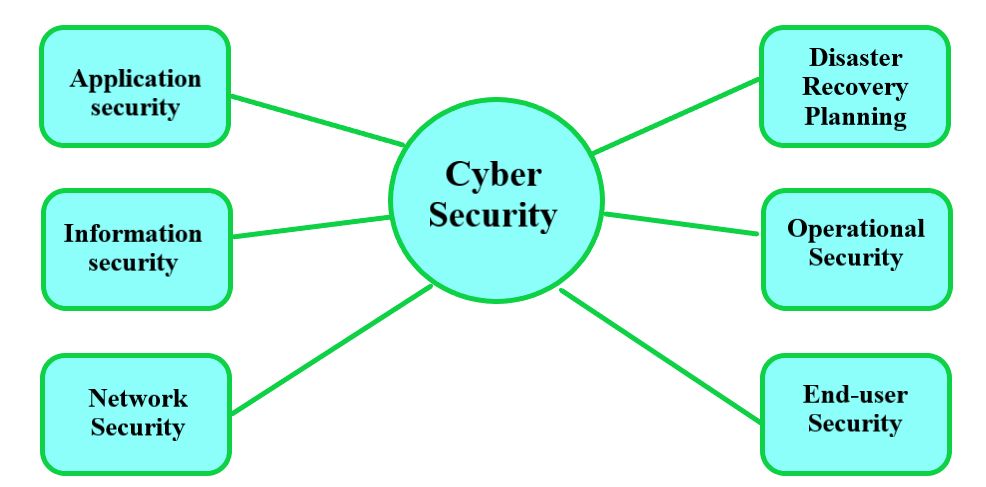
Below are the major elements of cyber security explained in detail:
1. Application Security
Application security involves adding security features during software development to protect applications from cyberattacks. It safeguards websites and online applications from threats exploiting vulnerabilities in source code.
- Common Vulnerabilities:
- Denial-of-Service (DoS) and Distributed Denial-of-Service (DDoS) attacks flood servers with traffic to make them inaccessible.
- SQL Injection (SQLi) attacks exploit database weaknesses to steal or modify data without authorization.
- Types of Application Security:
- Authentication
- Authorization
- Encryption
- Logging
- Application security testing
- Tools:
Firewalls, antivirus software, encryption techniques, and web application firewalls.
2. Information Security
Information security protects data from unauthorized access, use, disclosure, alteration, or destruction. It focuses on protecting company data and user information collected by organizations.
- Core Principles (CIA Triad):
- Confidentiality: Ensuring only authorized users access sensitive data.
- Integrity: Maintaining accuracy and completeness of information.
- Availability: Ensuring authorized users can access data anytime.
- Security Controls:
Encryption, access controls, backup and recovery, and error detection mechanisms.
3. Network Security
Network security protects computer networks from unauthorized access and threats.
- Key Strategies:
Firewalls, antivirus, email security, web security, wireless security. - Tools:
Network firewalls, cloud application firewalls, web application firewalls.
4. Disaster Recovery Planning / Business Continuity Planning
This planning ensures quick and efficient recovery of operations after a disaster.
- Objectives:
- Protect the organization during disasters
- Minimize downtime
- Ensure reliability of backup systems
- Establish testing standards for the plan
- Categories:
- Data center disaster recovery
- Cloud application disaster recovery
- Service-based disaster recovery
- Virtual disaster recovery
- Key Steps:
Top management commitment, risk management, prioritizing tasks, strategy development, documentation, testing, and plan maintenance.
5. Operational Security (OPSEC)
Operational security helps organizations identify and protect sensitive information from cyber threats by analyzing activities from an attacker’s perspective.
- Five Key Steps:
- Identify sensitive data
- Identify threats
- Analyze vulnerabilities
- Assess risks
- Implement countermeasures
- Best Practices:
Change management, limiting access to devices and data, dual controls, automation, and disaster recovery planning.
6. End User Education
End users are often the weakest link in cybersecurity. Educating users is critical to prevent human errors leading to breaches.
- Common Threats:
Social media misuse, phishing emails, insecure text messaging, unsafe app downloads, poor password practices. - Training Focus:
Awareness of phishing, password hygiene, recognizing suspicious activity, and safe internet use.
Conclusion
Understanding and implementing these elements of cyber security is vital for protecting digital assets in today’s connected world. Organizations must invest in technologies, policies, and education to build robust defenses against evolving cyber threats.